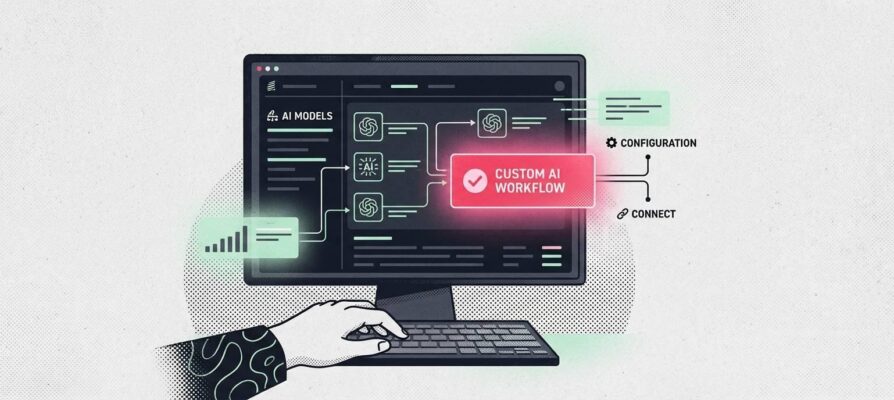
AI agent platforms go one step further than tools like ChatGPT or Claude: they do not just answer prompts, they can also take over parts of the work. That can mean turning a long email thread into action points, checking campaigns for unusual changes every day, preparing a follow-up, or drafting the first version of a report. This is exactly why tools like OpenClaw, Manus, Dispatch, NemoClaw, and Perplexity Computer are becoming more relevant. They all aim to make AI more useful in day-to-day work, but they are built for very different teams and very different needs.
If you are looking for the most flexible and future-proof option, OpenClaw is still our number one pick. It gives you much more freedom when it comes to how your AI setup works, which models you use, and how different tasks should be handled. If you are just getting started and want something easier to access, tools like Manus or Dispatch can be a very good entry point.
You are not simply choosing a new AI tool. You are deciding whether you want a solution for a few concrete tasks today, or a platform that can grow with your workflows over time. From our perspective, that difference becomes critical as soon as a company stops just testing AI and starts using it in real day-to-day work.
OpenClaw vs. Manus, Dispatch, NemoClaw, and Perplexity Computer
When you compare these tools, one idea helps above all: some are built for maximum flexibility, others for maximum simplicity. Neither approach is automatically better. What matters is what the tool should actually do for you.
| OpenClaw | Best if you want flexibility, model choice, and access to a fast-growing community that continuously releases public skills and new use cases instead of waiting for a single vendor to decide what comes next. |
| Manus | Best if you want a simple, polished starting point for testing AI agents without too much technical complexity. |
| Dispatch | Best if you want a guided experience inside the Anthropic ecosystem and value ease of use more than flexibility. |
| NemoClaw | Best if security, governance, and controlled deployments matter more to you than simplicity. |
| Perplexity Computer | Best if you want a convenient, assistant-style solution with as little setup effort as possible. |
So before you let branding or buzzwords drive the decision, ask a more useful question: Do you need a tool you can start using quickly, or a platform that can grow with your use cases over time?
OpenClaw
OpenClaw is an open AI agent platform for teams that do not want to commit to just one model like ChatGPT or Claude. Instead, it lets you combine different tools in one setup and use the best model for each part of a task.
That is a real advantage for marketing teams, because many tasks are not just one task. A monthly performance update, for example, usually combines analysis, research, and communication.
Example: your team is preparing a monthly marketing update for leadership. Perplexity researches competitor activity and market developments, Claude works through longer reporting notes and distills the actual performance story, and ChatGPT turns it all into a clear, management-ready update.
Pro:
Its biggest strength is flexibility. You can use the best model for each subtask instead of being tied to one provider. On top of that, OpenClaw has built an active community in a very short time, with people constantly creating public skills and new use cases.
Contra:
OpenClaw requires more technical understanding and, above all, stronger security awareness than more guided products. Precisely because it is so powerful, it can interact deeply with systems, workflows, and tools. That is a major advantage, but it also means teams need to think carefully about access rights, governance, and guardrails.
Manus by Meta
Manus is a more guided AI agent product for teams that want to see results quickly without having to spend much time thinking about models, routing, or setup. We see Manus less as a direct replacement for OpenClaw and more as a strong entry point. It offers a smoother, more guided experience, and for many teams that is more valuable at the beginning than maximum freedom.
That is especially true when the first goal is simply to understand what AI agents can actually do, test a few use cases, and build internal confidence.
Pro:
Manus is easy to understand and gives even less technical teams a very accessible way into the world of AI agents.
Contra:
You have much less control over which models or workflows are being used behind the scenes. That can become limiting later on.
Dispatch by Anthropic
Dispatch is Anthropic’s guided AI workflow solution built around the Claude ecosystem, making it a strong fit for teams that already like working with Claude. Instead of offering a highly flexible multi-model setup, it extends Claude into more structured day-to-day workflows and makes that feel more natural within one product environment.
That can be especially interesting for teams whose work is heavily document- and communication-driven.
Example: your team has just finished a cross-functional launch meeting. There are notes in a Google Doc, follow-up comments in Slack, and a longer email thread with leadership feedback. Dispatch can turn all of that into one clear internal update: what was decided, what still needs approval, and what each team needs to do next. That is where Dispatch stands out — it makes messy knowledge work much easier to handle.
Pro:
Dispatch is structured, easy to follow, and especially useful if your team already works comfortably with Claude.
Contra:
You are more tightly tied to the Anthropic ecosystem, which means less flexibility than with a platform like OpenClaw.
NemoClaw by NVIDIA
NemoClaw is NVIDIA’s more security-focused approach to AI agents, built for organizations where control, governance, and clear deployment boundaries are essential.
Example: a global marketing team in a large company wants to use AI for regional performance summaries, internal planning documents, and launch coordination, but does not want sensitive internal data flowing through open consumer tools. That is exactly the kind of scenario where NemoClaw becomes attractive, because it is designed for controlled usage rather than pure convenience.
Pro:
NemoClaw is a strong option for companies that need more control, tighter governance, and more managed deployments.
Contra:
For non-technical teams, it is less intuitive and feels much more infrastructure-heavy than the other options in this comparison.
Perplexity Computer
Perplexity Computer is a convenience-first AI tool from Perplexity for users who want to move from research to action with as little setup as possible. It is less about deep customization and more about making AI immediately useful, especially for people who already use Perplexity for search and research.
Pro:
Perplexity Computer is easy to pick up and very practical for research-heavy tasks.
Contra:
There is less room to customize workflows or combine different models for different subtasks.
So What?
If you are at the beginning of your AI journey and simply want to understand what is possible, more guided tools like Manus or Dispatch can be a very smart starting point. They help you build hands-on experience quickly without overwhelming your team with too many technical decisions.
But if you already know that your business will need different workflows, tools, or models depending on the task, then a more flexible setup becomes far more valuable. That is exactly why OpenClaw remains at the top for us. It gives you room to grow beyond the first use case instead of forcing you to rethink everything later.
Your Next Steps for Evaluating AI Agent Platforms
If there is one thing to take away from this comparison, it is this: the best AI agent platform is not the one with the loudest promise, but the one that best fits the way your team actually works. In our view, OpenClaw remains the strongest overall option because it gives you the freedom to choose the right model and the right setup for each task. That does not mean it is the right starting point for every team. If you are still building internal understanding, Manus or Dispatch can be very sensible first steps.
That is exactly where we can help. Choosing an AI tool is only one part of the equation. The bigger question is how that tool fits into your workflows, your data setup, and your broader digital strategy. If you are currently evaluating AI-driven automation, agent workflows, or the role of data and analytics in making these systems genuinely valuable in day-to-day work, that is exactly the type of conversation we have at Advance Metrics.