Did you know that more than 70% of consumers expect companies to deliver personalized interactions? Yet the vast majority of businesses are not ready and often assume this requires an enterprise-grade data warehouse and complex development. But thanks to AI and automation tools, true 1-to-1 personalization is no longer a luxury reserved for tech giants with endless budgets and complex tech stacks. It simply means we need to approach it differently, leveraging accessible tools to work smarter rather than overhauling our entire systems.
AI enables personalization at scale by replacing the manual work that made individualized engagement economically unfeasible. The benefits directly impact the bottom line: maximizing the engagement of your marketing assets, generating hyper-relevant product recommendations to drive sales, and providing 24/7 expert customer support that builds trust. It also empowers your team to book more meetings through perfectly timed and adapted outreach, accelerates deal cycles with highly individualized follow-ups, and instantly turns customer feedback into retained accounts and positive public reviews.
Let us have a look at six practical AI scenarios, why they matter for your business, and how you could implement them today.
The 6 AI Use Cases That Enable Personalization at Scale for Every Business
AI and marketing automations help you achieve personalizations at a scale that used to be unfeasible. The good thing is that no matter your current tech stack or your AI- and automation-readiness, here are six use cases that every business can implement today.
| The “Drop-In” knowledge chatbot | A custom AI agent that is trained on your PDFs, docs, and knowledge base to answer specific visitor questions without backend coding or CRM integration. |
| Product recommendation engine | Email recommendations on previous purchases, either deeply integrated or via a simple CSV file. |
| Empathetic feedback loop | AI evaluates incoming survey responses in real-time, logs the data into a central database, automatically sends review invites to happy customers, and routes negative feedback for immediate resolution. |
| Hyper–personalized follow-ups via AI note takers | Meeting assistants transcribe calls and instantly generate follow-up emails highlighting specific client pain points, action items, and next steps for each participant individually. |
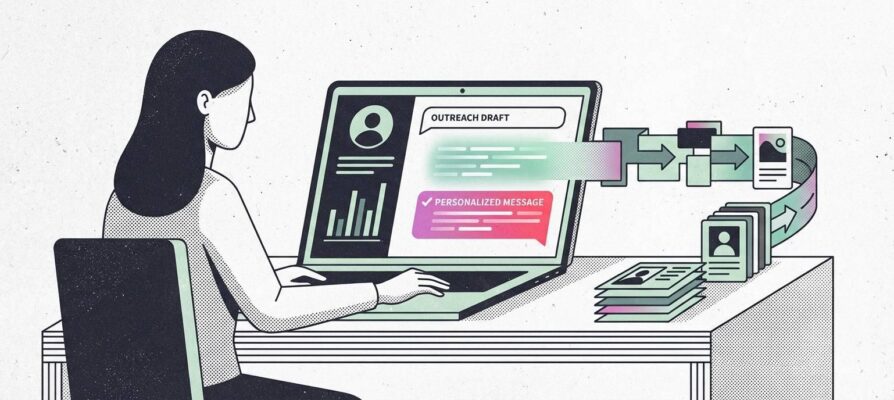
| Automated social listening & outreach | An AI automation monitors prospects’ social posts and automatically drafts hyper-personalized DMs that references their specific content and multiple additional data points to book sales calls. |
| Repurposing marketing materials for all relevant channels | An AI automation tool transforms a single piece of content into platform-specific formats and tones, publishing across channels without manual intervention. |
Personalization at scale has evolved from competitive advantage to baseline expectation that manual processes cannot deliver. AI automations close this gap, enabling your business to adapt to this new reality without the need for additional headcount.
Drop-In Knowledge Chatbot: Instant AI Expert Trained on Your Content
A custom AI agent that is trained on your PDFs, docs, and knowledge base to answer specific visitor questions without backend coding or CRM integration.
The Problem: You want to give website visitors personalized answers to their highly specific questions, but your website is built on a rigid, perhaps even outdated platform. Traditional support options force a choice: hire more support staff to provide personalized answers (expensive, slow to scale), or deploy FAQ pages and decision-tree bots (cheap, but impersonal and often frustrating).
The Scenario: Visitors land on your site with specific questions: “Do you integrate with Salesforce?” “What’s your data retention policy?” “How does pricing work for non-profits?” Your support team answers the same questions dozens of times daily.
A generic chatbot gives canned responses that frustrate users. Building a custom solution requires developers, API integrations, and mapping out decision trees, and paying developers to integrate it with your tech stack.
The Solution: AI chatbots ingest your existing documentation, like product specs, FAQs, case studies, or pricing PDFs and instantly become domain experts that answer questions in your brand voice with source-specific accuracy. The AI doesn’t just keyword-match; it understands context, synthesizes information across multiple documents, and personalizes responses.
- Upload your knowledge base – Drag your PDFs, Word docs, help articles, and internal wikis into a vector database for Retrieval-Augmented Generation (RAG).
- Set personality and guardrails – Tell the AI: “Respond in friendly, concise language. Never discuss pricing without offering to connect to sales. If asked about competitors, focus on our unique strengths. Always cite which document you’re pulling from.”
- Add personalization triggers – Configure the AI to adapt responses based on visitor context: if they came from a healthcare industry ad, emphasize HIPAA compliance; if they’re on the enterprise pricing page, automatically offer a demo booking link.
- Embed on your site – Copy-paste a single line of code to add the chat widget. The AI goes live very quickly already trained on your entire knowledge base.
- Monitor and improve – Review conversation logs to identify gaps in your documentation, trending questions, and opportunities to refine AI responses; the system gets smarter with each interaction.
The AI Advantage: AI knowledge chatbots deliver personalized expert-level support at scale. Each visitor gets contextually relevant answers drawn from your exact documentation, responses adapt in real-time based on their role and interests, and the system can handle thousands of simultaneous conversations with consistent quality. You achieve the attentiveness of a dedicated support rep who’s memorized every product document, available 24/7 for every visitor, without adding headcount.
This leverages Retrieval-Augmented Generation (RAG) in a consumer-friendly package. The AI personalizes the experience by instantly finding the exact needle in your document haystack that matches the user’s specific context, mimicking a knowledgeable human agent.
Spreadsheet AI: Automated Product Recommendations at Scale
AI formulas inside spreadsheets generate thousands of individualized product recommendations in seconds based on customer data patterns.
The Problem: Traditional segmentation divides your audience into 5-10 broad buckets and sends each group the same message; “enterprise customers get email A, SMBs get email B.” Generic email blasts get ignored because they don’t address specific needs. You need personalized recommendations for thousands of prospects, but you don’t have thousands of hours.
The Scenario: Your sales team has a spreadsheet with thousands of leads and customers, each with industry, company size, current tools, and pain points. You want to send a targeted re-engagement campaign, but you don’t have the tech stack for a dynamic recommendation engine. Manually reviewing each row to recommend the right product tier, feature set, or use case would take weeks.
The Solution: AI-powered spreadsheet formulas analyze customer attributes in real-time and generate tailored recommendations, messaging, and next-best-actions directly in your existing workflow. The AI processes patterns across your entire dataset, identifying that fintech companies under 50 employees respond to compliance messaging, while enterprise retailers need integration capabilities, and applies these insights to personalize outreach at scale. Unlike rules-based segmentation that requires manual “if company size > 500, then…” logic, AI formulas understand nuanced combinations of signals and generate recommendations that sound human-written, not template-filled.
- Leverage your customer data – Export your customer data into a spreadsheet (no matter if it currently lives in a messy CSV or a data warehouse).
- Connect AI to your spreadsheet – Connect the AI tool of your choice to your spreadsheet.
- Write a recommendation formula – Write a personalization prompt for AI to leverage the leads’ existing data points (e.g., industry, company size, pain points, purchase history), and save the result in a new column.
- Generate at scale – Drag this prompt down to apply to all rows. AI processes each lead individually, creating unique recommendations in a few minutes vs. weeks of manual work.
- Route to automation – Export personalized columns to your email tool, CRM, or ad platform. Each prospect receives messaging crafted specifically for their context, no batch-and-blast.
The AI Advantage: AI spreadsheet formulas deliver true 1:1 personalization: every single lead gets a recommendation based on their unique combination of attributes. The language adapts to their industry’s terminology and concerns, and new patterns emerge automatically without manually updating segment rules.
You achieve the personalization quality of a dedicated account manager conducting individual research, but at the speed and scale of mass automation: thousands of genuinely customized recommendations generated in minutes, not months.
The Empathetic Feedback Loop: AI-Powered Sentiment Response
AI evaluates incoming survey responses in real-time, logs the data into a central database, automatically sends review invites to happy customers, and routes negative feedback to the right team for immediate resolution.
The Problem: Customer feedback arrives through multiple channels; post-purchase surveys, support ticket ratings, in-app prompts, social media comments. By the time someone manually reviews responses, angry customers have already churned, and happy customers have moved on (missing the window to request reviews).
Generic “Thanks for your feedback” emails make customers feel unheard, especially those who took time to explain specific problems or are enthusiastic about your products or services.
Traditional feedback management either ignores individual responses (aggregating data into quarterly reports no one acts on) or requires massive manual effort to triage, respond, and track feedback across scattered systems.
The Scenario: Your continuous customer satisfaction survey generates a number of responses a week. Some are angry about specific software bugs, some are thrilled with their account manager, and others are neutral. You need a system that instantly logs all this data, puts out fires with the unhappy customers before they churn, and capitalizes on the positive momentum of the happy ones, all without requiring a human to manually triage the inbox.
The Solution: An AI automation acts as your 24/7 customer success triage manager. It connects your survey tool to your internal database and communication channels. The moment a survey is submitted, the AI reads the feedback, determines the sentiment, logs it centrally, and then triggers the appropriate automated workflow. It turns a static survey into an active, real-time retention and marketing engine.
- Aggregate feedback sources – Connect all customer feedback channels to feed to a central automation platform.
- Run real-time AI sentiment analysis – AI processes each response immediately to identify: sentiment score (e.g., promoter/passive/detractor), specific issues or praise mentioned, urgency level (routine feedback vs. churn risk), customer segment (new user vs. long-term customer, account value), and whether human intervention is required.
- Route negative feedback for action – Detractor responses automatically trigger: alerts to your support team with customer context and AI-suggested response templates, CRM flags for account managers to follow up personally, and escalation workflows for high-value accounts or severe issues mentioning cancellation/competitors.
- Auto-request reviews from promoters – When AI detects enthusiastic positive feedback, it immediately sends a personalized review request (for a third-party platform of your choice) while enthusiasm is fresh.
- Log everything to a central database – All feedback automatically populates a master database with: timestamp, customer ID, sentiment score, themes mentioned (pricing/support/features/bugs), response status, and any actions taken as well as reviews received.
The AI Advantage: AI feedback triage achieves the Holy Grail of customer experience: immediate, appropriate reaction. Negative feedback reaches the right person within minutes (not days or weeks), with context that enables immediate, personalized resolution before customers churn; positive feedback converts into reviews while customers are still excited, dramatically improving review capture rates; and all feedback is instantly structured and searchable, revealing product trends and customer sentiment patterns without manual tagging or quarterly analysis projects.
AI Note Takers for Follow-Ups: From Meeting to Personalized Email in Minutes
Meeting assistants transcribe calls and instantly generate follow-up emails highlighting specific client pain points, action items, and next steps for each participant individually.
The Problem: Traditional follow-up approaches after calls either sacrifice speed (spending 30 minutes per call writing personalized emails) or sacrifice personalization (using generic “great chatting with you” templates that ignore specific discussion points), and are unfeasible to tailor for each participant individually.
The Scenario: You just finished a one-hour client call covering budget concerns, technical requirements, timeline constraints, and three specific feature requests. Now you need to send a follow-up email to each participant that references everything discussed, assigns next steps, and addresses their unique concerns.
As an account manager, you have multiple client calls today and need to send actionable follow-ups that make each client feel heard and prioritized. Writing this from memory takes 20-30 minutes, inevitably omits details, and is unfeasible to tailor to each participant individually. Multiply this across multiple calls per day and follow-ups become a bottleneck that delays deals.
The Solution: AI meeting assistants join your virtual calls, transcribe everything in real-time, and automatically generate personalized follow-up emails that reference specific client pain points, questions asked, and commitments made during the conversation. The AI doesn’t just summarize, it identifies emotional cues (when the client expressed excitement or concern), extracts action items with owners, and tailors the follow-up tone to match the meeting’s energy. Unlike manual note-taking that can’t capture everything of what’s said, AI processes every word and intelligently prioritizes what matters most to each specific client based on their role, repeatedly mentioned concerns, and moments when they engaged most.
- Deploy AI meeting assistant – Add AI tools to join your calendar automatically (or via manual invitation) that record and transcribe, without participant action required.
- Set personalization parameters – Configure AI to identify: customer pain points mentioned, feature requests, budget/timeline concerns, competitor references, decision-maker comments, and moments of enthusiasm or hesitation.
- Auto-generate follow-ups – Immediately after the call ends, AI produces: a personalized email (“Thanks for walking me through your Q4 migration timeline and concerns about data security, here’s how we address both…”), a summary highlighting client-specific priorities, and a task list with owners based on who committed to what.
- Add segmented messaging – AI adapts email tone and content based on recipient: executives get strategic next steps and ROI focus, technical stakeholders get implementation details and integration specs, end-users get training resources, all from the same meeting.
- Review and send – Scan the AI-generated email for accuracy, make minor tweaks, and fire off follow-up within 5 minutes of call ending while details are fresh in client’s mind.
The AI Advantage: AI meeting assistants deliver speed and personalization: every follow-up email is genuinely customized with exact pain points, questions, and commitments from that specific conversation, sent within minutes while the meeting is still top-of-mind for your client, and adapted to each stakeholder’s role and concerns when multiple people were on the call. You achieve the attentiveness of taking perfect notes on every word spoken and the thoughtfulness of crafting individualized responses for each participant. Automatically, at scale, without extending your workday by hours of follow-up writing.
Automated Social Listening & Outreach: AI-Powered Warm Introductions
An AI automation monitors prospects’ social posts and automatically drafts hyper-personalized DMs that references their specific content and multiple additional data points to book sales calls.
The Problem: Cold outreach is usually a numbers game with terrible conversion rates. Generic pitches are mostly ignored, and manually researching each prospect’s recent activity to write a custom message takes too long at scale.
That’s why traditional outbound sales relies on cold email sequences blasted to static lists; everyone gets the same “Hey [FirstName], I noticed you work in [Industry]” regardless of timing or context. Generic cold outreach gets ignored because it’s obviously templated.
The Scenario: You have a list of hundreds or even thousands of high-value targets on relevant social networks. You want to hit them at the exact right moment with a message that proves you understand their specific business worldview, ultimately driving them to a sales call.
Your ideal prospects are posting on relevant social networks regularly: sharing wins, venting frustrations, asking for recommendations. These are perfect conversation starters, but manually monitoring all of your prospects, reading their posts, and crafting personalized outreach takes too much time to be feasible.
The Solution: An AI automation monitors your prospect list’s social activity in real-time, identifies trigger moments (they posted about a pain point you solve, mentioned a relevant project, or asked for tool recommendations), and instantly generates personalized outreach that references their specific content. The AI doesn’t just insert their name into a template, it analyzes the tone and substance of their post, identifies the underlying need or emotion, researches additional data points, and crafts a response that feels like genuine human engagement. Unlike scheduled email sequences that ignore context, AI outreach arrives exactly when prospects are thinking about the problem you solve, with messaging that proves you’re paying attention.
- Build your prospect watchlist – Create a spreadsheet of target accounts with relevant social network profile URLs, industry, and known pain points you address.
- Set up social monitoring automation – Use a tool to scrape your prospects’ relevant social network activity (e.g., posts, comments, profile changes) and feed new activity into your automation workflow.
- Configure AI analysis triggers – When a prospect posts, AI evaluates: “Does this mention [your solution category]? Does it express frustration with [problem you solve]? Is this a buying signal? Is this relevant to [your industry]?” If yes, proceed to outreach generation.
- Generate contextual messaging – AI reads the post, researches additional data points, and creates a personalized DM that references their exact language and situation at a time they care about it.
- Review and send (or auto-send) – Set up workflows to either notify your team for manual review, or auto-send fully personalized messages that meet quality thresholds. AI logs all activity to your CRM automatically.
The AI Advantage: AI social listening achieves true warm outreach at scale: every message is triggered by a real-time signal that the prospect is actively thinking about your category, the content references their specific words and situation (not generic industry pain points), and timing is perfect because you’re directly responding at the time they publish, not days later.
You get the conversion rates of manually researched, perfectly timed outreach, executed automatically across hundreds of prospects simultaneously; personalized relevance that’s impossible with traditional sales automation.
Omnichannel Personalization: AI-Powered Content Multiplication
An AI automation tool transforms a single piece of content (e.g., a blog post) into platform-specific formats and tones, publishing across channels (e.g., different social media channels, email) without manual intervention.
The Problem: Traditional content repurposing forces you to choose between scale and personalization; either share the same generic message everywhere, or spend hours manually customizing content for each audience segment. Creating content for every platform is time-intensive. Most companies write one blog post and share the exact same link and headline to LinkedIn, X, and their email list, ignoring the fact that audiences on different platforms expect different formats and tones.
The Scenario: You spent many hours writing the perfect blog post about your new product feature. You want to share it across all your channels, but you know a long-form essay won’t perform well on social media or in a quick newsletter. Now you need a LinkedIn post, an email newsletter, an Instagram caption, and a script for a short video. Each platform demands a different tone, length, and format.
The Solution: AI automation platforms connect your content sources to your distribution channels, analyzing each piece and automatically generating personalized variations for every platform. The AI doesn’t just resize your content, it rewrites with platform-native voice, adapts messaging and content structure.
- Connect your content hub – Link your blog RSS feed, the folder where you save your blog documents, or CMS to an automation tool.
- Set up AI transformation workflows – When new content publishes, trigger AI to generate variations with specific templates and personalization rules for each platform.
- Auto-schedule with performance learning – AI publishes content to each platform at peak engagement times, with A/B tested titles/ captions/ subject lines. AI tracks which variations perform best and feeds those patterns back into future content generation.
- Add audience segmentation to your email newsletters – AI analyzes your subscriber data (industry, company size, role, engagement history) and customizes messaging; a technical audience sees architecture details, executives see business outcomes, existing customers see advanced use cases.
- Deploy without watching – The entire workflow runs on autopilot; one blog post automatically gets published across multiple channels.
The AI Advantage: AI automation breaks this trade-off between scale and personalization: it maintains platform-native messaging that feels hand-crafted rather than automated, creates personalized versions, and continuously improves based on what resonates with each audience.
What AI-Powered Personalization at Scale Means for Your Business
AI-powered personalization eliminates the decades-old trade-off between scale and quality. You no longer choose between reaching thousands of people or giving each person genuine attention. Every customer and every prospect can now receive the personalization you previously reserved for your top accounts. They can get the immediate, contextual responses they feel like they deserve.
This shift also fundamentally resets customer expectations. What felt “responsive” six months ago now feels slow. What felt “personalized” last year now feels generic. The bar is rising in real-time, and manual processes cannot keep pace. Buyers now expect instant follow-ups, contextual outreach, and expert-level answers at any hour because AI everywhere else has clearly demonstrated this to be the new reality.
However, while AI-powered personalization unlocks significant advantages, it also comes with important considerations that you cannot ignore. Handling customer data at scale requires strict attention to privacy regulations, especially in regions like the EU where compliance standards are high. At the same time, AI systems are not infallible; they can generate inaccurate or misleading outputs (“hallucinations”) if not properly guided and monitored.
AI democratizes personalization, which means early adopters gain temporary advantage before it becomes standard practice. Soon, AI-powered personalization won’t be a differentiator. Now is the time to stay ahead of the curve, with AI marketing automations that provide you a competitive edge.
The companies that succeed will be those that combine AI efficiency with human oversight, clear guardrails, and a deliberate focus on maintaining trust and authenticity in every interaction.
Advance Insights: How AI Automations Help You Achieve a Competitive Advantage
Understanding these AI automation use cases is only the starting point; the next step lies in implementing and adapting them to your specific business needs.
As Advance Metrics’ automation expert, I bring over three years of experience helping brands implement AI use cases with practical relevance. I often hear the same questions about these, especially from companies that are at the very beginning of this journey.
To bridge the gap between the use cases we just discussed and their practical implementation, I have outlined the most frequent questions I receive.
Question: What tactical changes should companies implement immediately to start personalizing at scale?
Answer: Audit your current manual workflows for repetitive communication: where are your teams copying and pasting generic templates? This is not about replacing your team; it is about plugging accessible AI into existing processes to improve your customer experience and let your staff focus on more complex problem-solving tasks.
Question: What is the single biggest mistake you see companies make when trying to implement AI personalization?
Answer: They assume they need to overhaul their entire tech stack and build an enterprise-grade data warehouse first. The biggest mistake is treating personalization as a multi-year IT project rather than an immediate operational lever. Smart brands recognize that leveraging accessible, out-of-the-box AI tools to automate daily 1-to-1 interactions builds genuine relationships and drives revenue right now, without waiting for perfect data infrastructure.
Question: How should B2B companies specifically approach practical AI personalization differently than B2C?
Answer: B2B buying cycles rely heavily on relationships and multi-stakeholder consensus, which actually makes AI-powered meeting follow-ups and social listening incredibly powerful. A B2B company should focus on using AI to monitor prospect trigger events to generate hyper-personalized and timely outreach. For B2B, the goal is using AI to give a lean sales team the capacity to deliver a highly attentive, consultative experience to every single account.
Question: Will customers notice that AI is writing their personalized messages, and does that hurt authenticity?
Answer: Only if you are using it wrong. The AI should analyze context and draft messaging, but humans should review and add the final touch for high-stakes interactions. That is until you are confident enough that AI gets the messaging right. The goal is not to replace human judgment but to eliminate the research and draft time that prevents personalization at scale. When done well, customers notice better responsiveness and more relevant messaging, not robotic templates. The authenticity comes from addressing their actual needs accurately and quickly, which AI enables.
Question: Looking ahead 2-3 years, how do you see the landscape of AI personalization evolving for everyday businesses?
Answer: Personalization will become entirely fluid and expected across every touchpoint, with AI automations and agents automatically adapting messaging, tone, and formatting in real-time without manual prompting. Brands that master agile AI workflows today will have a compounding advantage in customer trust and operational speed. We will also see a premium on the underlying human strategy; the AI can execute the perfect outreach or response, but companies that invest in understanding their customers’ deep emotional drivers will guide the AI to the most impactful outcomes.
Your Next Steps for Implementing AI Personalization at Scale
The personalization reality means that competitive advantage now belongs to companies that respond faster and more relevantly than humanly possible through manual effort alone. AI personalization is not just an efficiency tool but a fundamental shift in how businesses engage customers across every touchpoint, from first contact to post-sale feedback.
If you are ready to move beyond manual personalization bottlenecks and start scaling genuine one-to-one engagement, we can help. Our AI automation and personalization strategy services are built specifically for businesses that want measurable impact without technical complexity, helping companies like yours identify the highest-leverage use cases and implement systems that drive immediate results. Let us evaluate where personalization is currently breaking down in your customer journey and where AI automation can unlock your biggest growth opportunities.