Data is the foundation of online marketing campaigns and determines how efficiently marketing budgets can be used.
However, many companies struggle to assess the actual quality of their data. Are the numbers accurate and reliable? Are the right and relevant user interactions being measured? Is the data being used correctly to optimize marketing campaigns?
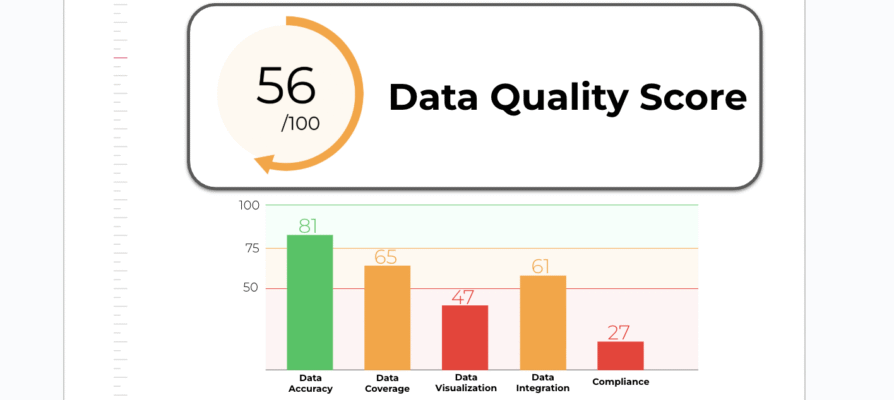
The Data Quality Score will show you whether your data is reliable and if your budget is being allocated efficiently across your marketing campaigns.
The Data Quality Score evaluates the key quality factors of your marketing data and shows how solid the data foundation is for campaign optimization, attribution, and budget allocation.
The Data Quality Score evaluates five core criteria:
1. Data Coverage – Are the relevant data points being captured?
The Data Quality Score checks whether all critical user actions along the customer journey are represented, such as e-commerce events in an online shop or lead activities in a B2B context.
Without complete data collection, essential building blocks for analysis and optimization are missing.
2. Data Accuracy & Reliability – Is your data trustworthy?
The Data Quality Score evaluates how accurate and reliable your data is, because only reliable data leads to good decisions.
Data reliability is reflected in:
- a clean tracking implementation
- reliable data collection (client-side or server-side)
- low error rates and consistent values
3. Data Visualization – Is the data accessible and easy to understand?
Good data is of little use if no one understands it.
The Data Quality Score checks whether data is accessible in clear, well-structured dashboards and reports that are actually being used.
4. Data Integration & Connectivity – How well are different data sources connected?
The Data Quality Score checks whether data can be seamlessly consolidated from different systems such as CRM, marketing automation, BI tools, or advertising platforms.
The better the individual systems are connected, the greater the value of the data.
5. Data Compliance – Is data collected and stored in compliance with data protection regulations?
Data collection and storage must be both functional and compliant with data protection requirements.
This includes, for example:
- obtaining user consent for data collection
- ensuring that up-to-date privacy notices are easily accessible
- having a data concept in place for the customer data that is collected and stored
Why the Data Quality Score Is Important
The Data Quality Score clearly shows how well your data can actually be used as a basis for performance optimization and efficient budget allocation in your marketing activities.
For marketing teams, performance managers, and CMOs, data quality is a direct performance lever: poor or incomplete data distorts campaign results, complicates optimization decisions, and leads to wasted budget. Reliable and complete data, on the other hand, ensures that media budgets flow to where they truly have an impact.
Our Data Quality Score makes your data quality:
understandable – you can see at a glance which elements of your data foundation are working reliably and where performance risks exist.
comparable – you can compare platforms, marketing channels, or audiences based on data and set clear priorities.
actionable – you receive clear, practical recommendations to improve your data foundation and use your marketing budget more efficiently.
The Data Quality Score not only provides a transparent overview of the current state of your data, but also shows you a clear, realistic roadmap for step-by-step improvements to your data quality, enabling better campaigns, more precise ad delivery, and smarter budget decisions.
Find out how high you rank in Data Quality Score!